

By Chris Zaccaria, Founder of Schnerds
Your child loves the idea of Halloween. The actual costume? Absolutely not. The hat feels strange. The sleeves are itchy. And the skeleton across the street has apparently decided to yell at everyone.
That is useful information.
A sensory friendly Halloween starts with noticing what your child enjoys, what feels uncomfortable, and which parts they want to try. With Halloween coming on October 31, there is time to make a plan together. It can be a small plan. Two houses and a pumpkin drawing still count as Halloween.
Does my child have to wear a costume?
No. Dressing up can be an invitation, with room to choose everyday clothes instead.
If your child wants a costume, try it before the celebration. Let them move around and tell you how it feels. A favorite shirt might become the whole outfit. A comfortable costume might lose its hat halfway through the evening. The costume department can handle a few revisions.
CHOC Children’s Hospital recommends trying costumes ahead of time and adjusting celebrations around a child’s needs. Its guidance specifically addresses autistic children with sensory sensitivities, while offering practical ideas families can adapt. Read CHOC’s Halloween guidance.
Comfort also needs to work alongside physical safety. The American Academy of Pediatrics recommends well fitting costumes and shoes, clear vision, and reflective details for visibility. Adults should accompany young children outside. See the AAP’s Halloween safety tips, updated September 29, 2026.
How can we make the evening more predictable?
Describe a small plan your child can picture.
“We’ll visit two familiar houses together. Then we’ll check how you’re feeling. We can keep going or head home.”
Beforehand, you could practice knocking on an inside door or walk past the decorations during daylight. CHOC recommends previewing the route and practicing the routine for children who want to participate.
Then add something important: a way to change the plan.
Choose a word, gesture, or picture your child can use to ask for a break. Explain what you will do when they use it. An exit plan is most useful when everyone knows it will be respected.
What can I say when my child feels scared?
Start with what they are telling you.
“That noise surprised you. Let’s step away.”
“You wanted to try the mask, and now you want it off. I can help.”
“You can watch from here. You don’t have to go closer.”
A child can be curious and uncomfortable at the same time. Give them space to decide whether they want another look, a little support, or something different to do.
What can Halloween look like at home or school?
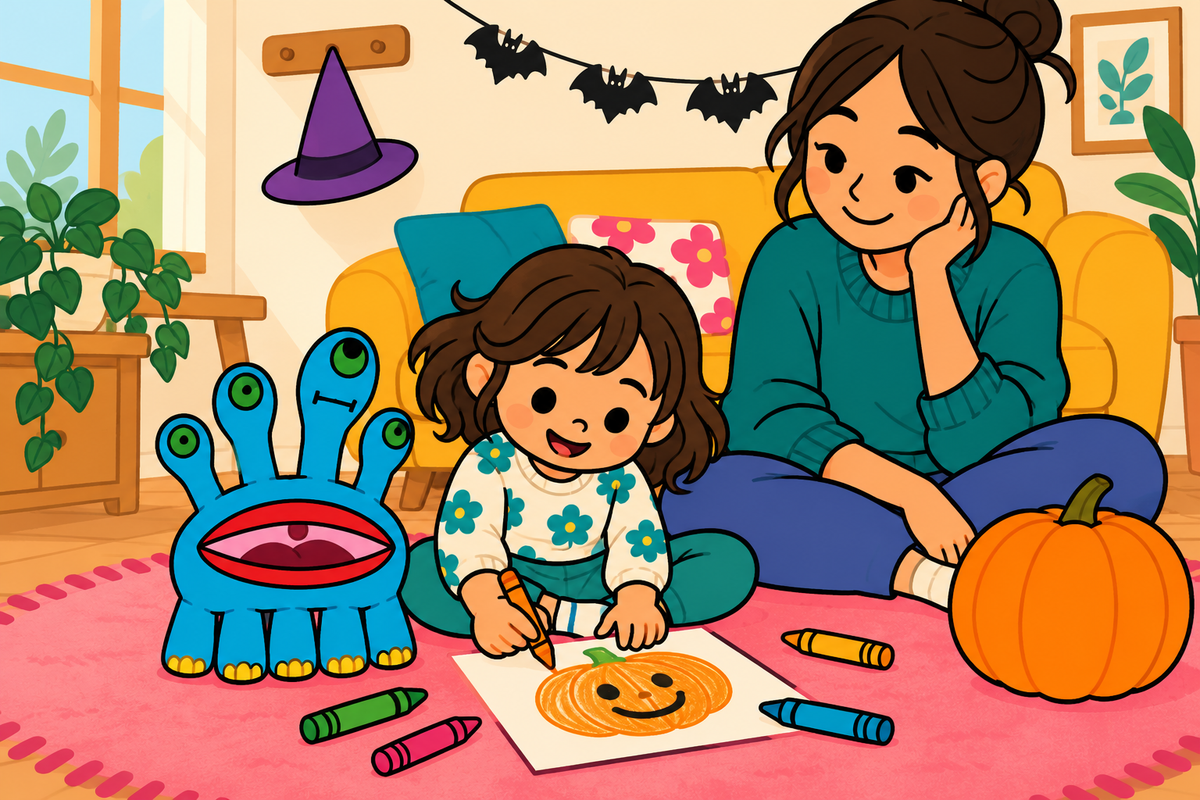
Try a pumpkin drawing invitation: “What kind of face does your pumpkin feel like making today?”
One child might draw a delighted pumpkin. Another might create a pumpkin that is tired of being orange. There is room for both.
At school, offer different ways to participate, such as drawing, listening to a story, watching the parade, or wearing a costume. Explain the choices to everyone so children can choose without having to explain themselves.
At home, a familiar story and a favorite character can become the celebration.
How can Darlene join the Halloween story?
Darlene aka Blue Schnerd makes room for wonderfully unusual ways of being. Her plush is made from 100% polyester and recommended for ages 3 and older.
If your child enjoys character play, invite Darlene into a pretend Halloween adventure. Ask, “Would Darlene like this party? What could we change to help her feel welcome?” Let your child invent the answer.
You can also meet Darlene and explore her character page.
At Schnerds, belonging means there is room for different feelings, different preferences, and different ways to join the herd. That includes the child wearing a spectacular costume and the child who came as themselves.
Both are welcome.