


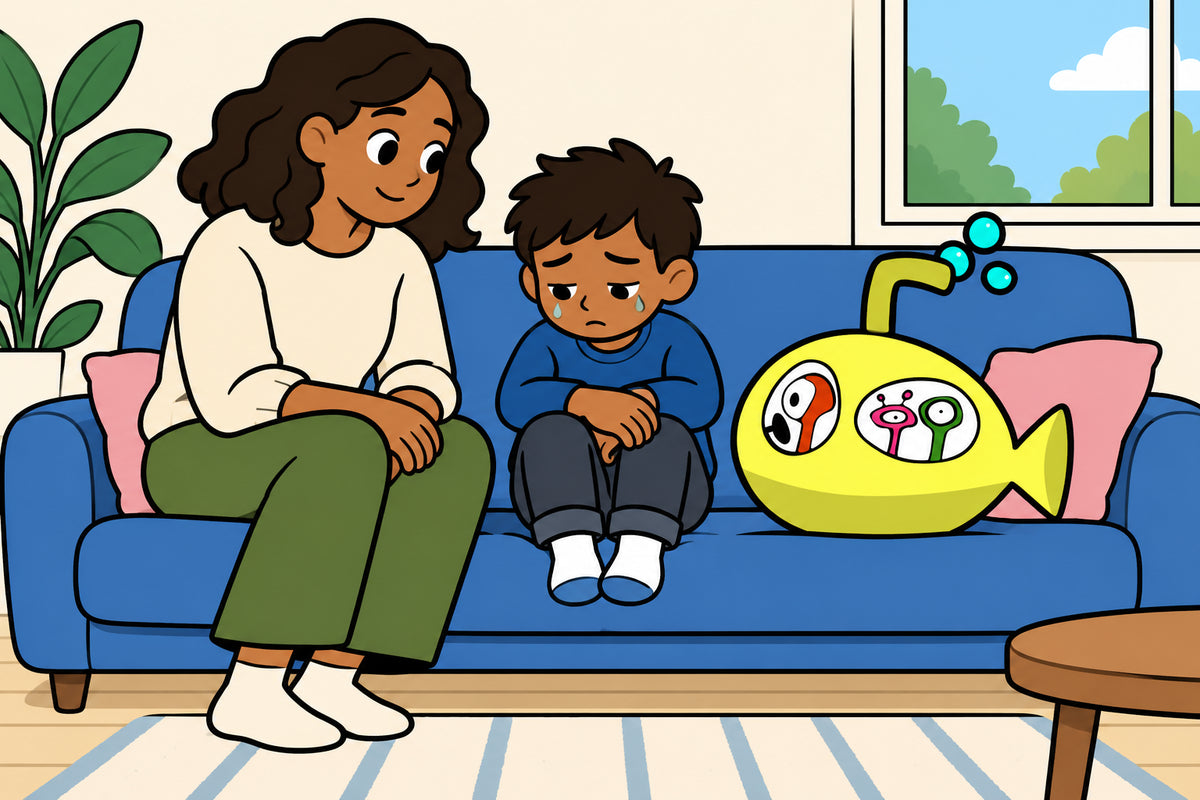
Helping kids sit with difficult feelings means giving them room to notice and express what they feel, with support from a caring adult. They do not have to become cheerful immediately. Comfort, movement and help can be welcome while disappointment is still there.
The school play has been cast. Your child got a part, just not the one they wanted.
You can already hear the encouraging speech forming in your head. There will be other plays. This part might be wonderful. At least they got a part.
Before delivering the speech, try staying with the thing that happened.
“You hoped for that role. You’re disappointed.”
Then leave a little room.
What does it mean to sit with a feeling?
It means allowing the feeling to be present without treating it as an emergency that must disappear.
It does not require sitting still. A child might cry, pace beside you, draw or hold something familiar. Another might want quiet. Ask what helps them feel supported.
Children’s Healthcare of Atlanta’s Strong4Life guidance on disappointment encourages adults to make feelings familiar and acceptable, helping children tolerate them rather than immediately trying to rescue them from the experience.
For your child, the invitation might sound like: “You can be upset about this. I can stay nearby.”
What can I do instead of trying to cheer my child up?
Offer your company before offering an explanation.
Put down what you can. Listen to what your child says. If they do not want to talk, you can quietly let them know you are available.
The American Academy of Pediatrics recommends listening without immediately solving the problem and asking how a child likes to be supported.
Try: “Would you like me beside you, or over here?”
You can also check your own urgency. Are you offering another activity because your child wants it, or because their sadness is uncomfortable for you?
Their face does not need to become your progress report.
Does comfort stop children from learning to tolerate disappointment?
You can offer comfort without undoing the disappointment.
A cuddle, a glass of water or a familiar companion can be part of staying with a feeling. You do not need to withhold kindness to make the lesson count.
Ask: “Would a hug help, or would you rather have some space?”
If your child wants to draw or move around, leave room for that. The useful question is whether the activity supports them, rather than whether they have managed to remain perfectly still.
You can hold both truths: the hoped for role went to someone else, and your child deserves care while that hurts.
What if the feeling lasts longer than I expected?
Avoid setting a deadline for looking happy.
You can help with the next necessary part of the day while acknowledging what is still there: “We need to head home. I can walk with you while you’re disappointed.”
Maintain safety, too. “I won’t let you hit your brother. I’ll help us make some space.”
Supporting a feeling does not mean accepting harm. If the upset comes from bullying or mistreatment, adults also need to address what happened.
If distress repeatedly disrupts sleep, school or everyday activities, ask your child’s pediatrician for support.
How can Juniper help us talk about a difficult feeling?
At a calm moment, invite Juniper aka Schnerdmarine into a small pretend story.
“Juniper hoped to see a whale today. The ocean stayed quiet. She’s disappointed.”
Ask, “Would she like someone nearby while she feels that?”
Let your child decide what happens. The whale does not need to appear on the next page. Maybe Juniper rests beside a friend and is still a little sad.
Meet the Juniper Schnerd Plush. This submarine character is recommended for children ages 3 and up. Families who enjoy pretend play can give her a part in stories like this one.
At Schnerds, love and belonging include the moments when we cannot offer a happy ending on demand.
When is it time to talk about what comes next?
When your child is ready for that conversation, ask whether they want help thinking it through.
“Would you like to talk about the play now, or leave it for later?”
There may be something practical to do. There may also be a disappointment that cannot be changed.
For now, you can stay close without finding the perfect answer.
The whale can remain somewhere out at sea. Juniper can remain disappointed. And she can still have company.


